How Smart Startups Can Cut Costs on Corporate Travel & Insurance



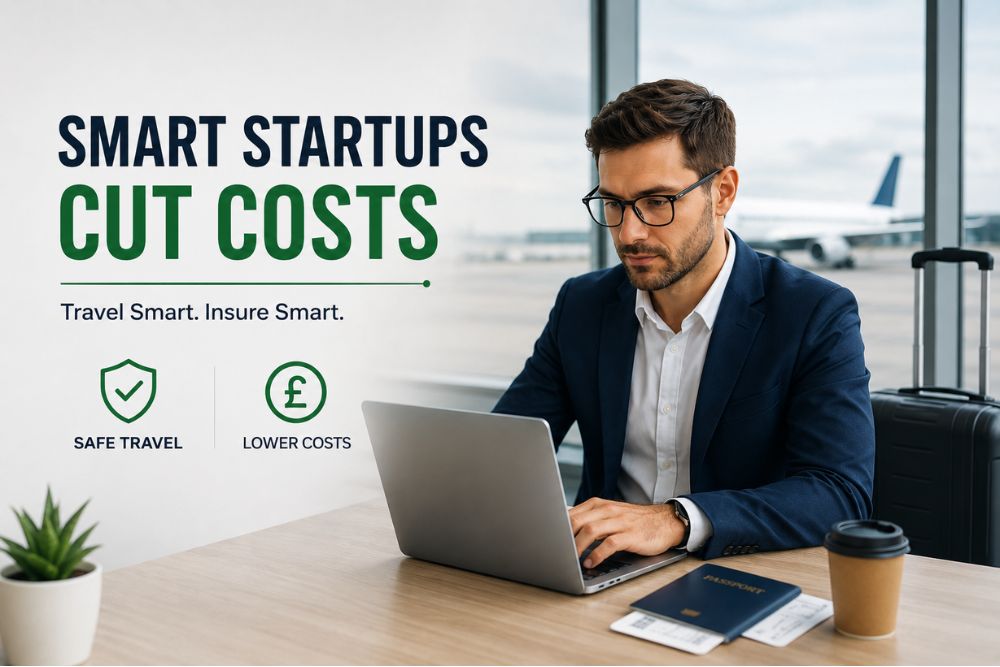

Business travel insurance is one of the most effective ways for startups to control risk while managing travel expenses. When combined with smart travel planning and strong corporate travel safety practices, it helps growing businesses reduce unexpected costs, protect employees, and maintain productivity.
For many startups across the UK, business travel remains essential. Teams travel for client meetings, conferences, supplier visits, networking events, and expansion opportunities. However, travel expenses can quickly consume a large portion of a startup’s budget if they are not managed carefully.
This guide explains how startups can reduce corporate travel costs while improving employee protection and making better use of travel insurance for business trips.
Smart startups reduce travel costs by planning trips strategically, using clear travel policies, prioritising corporate travel safety, and investing in appropriate business travel insurance. This approach lowers financial risk, prevents costly disruptions, and helps employees travel with confidence.
Business travel insurance is a policy designed to protect employees and organisations during work-related travel.
Unlike standard leisure travel cover, it addresses risks that commonly affect business travellers, including:
For startups, this protection can prevent a single travel incident from creating significant financial strain.
Travel costs have increased in recent years due to several factors.
These include:
As a result, startups must find smarter ways to manage travel budgets without limiting business growth.
Corporate travel safety refers to the policies, procedures, and protections businesses use to keep employees safe while travelling for work.
This includes:
A strong safety strategy often reduces overall travel expenses because fewer incidents lead to fewer unexpected costs.
Many businesses focus only on booking cheaper flights or hotels. However, prevention often creates greater savings.
For example:
As a result, startups can protect both their people and their finances.
Every startup should have a documented travel policy.
The policy should define:
Clear guidelines help prevent unnecessary spending and improve consistency.
Advance planning remains one of the simplest ways to reduce costs.
Early booking often provides:
Moreover, early planning allows businesses to evaluate risks before travel begins.
Many startups can reduce travel frequency by grouping activities together.
For example, a team visiting Manchester could schedule:
during a single trip.
This approach reduces transportation and accommodation expenses.
Travel disruptions can become expensive very quickly.
Travel insurance for business trips helps manage risks such as:
For startups operating on limited budgets, insurance often provides significant financial protection compared with covering these costs directly.
Not every meeting requires travel.
Many startups now combine:
This balanced approach reduces travel frequency while maintaining business relationships.
Consider a technology startup based in London expanding into Birmingham, Manchester, and Edinburgh.
Without planning, the company may face:
With a structured travel programme, the startup could:
As a result, the business could significantly reduce annual travel costs while improving employee wellbeing.
Yes.
For most startups, business travel insurance offers valuable protection against financial losses that could otherwise affect operations, cash flow, and growth plans.
Unexpected travel incidents are difficult to predict.
A single event can involve:
Insurance helps businesses manage these risks more effectively.
| Problem | Solution |
| Last-minute cancellations | Business travel insurance |
| Lost work equipment | Equipment protection cover |
| Medical emergencies | Emergency medical assistance |
| Travel delays | Delay compensation coverage |
| Employee safety concerns | Corporate travel safety programme |
| Budget overspending | Structured travel policy |
This combination of planning and protection helps startups maintain operational stability.
Many startups focus only on costs.
However, failing to assess travel risks can create larger expenses later.
The cheapest option is not always the most suitable.
Coverage quality often matters more than the lowest premium.
Employees should understand:
Proper training improves travel outcomes.
Reactive travel management often costs more than proactive planning.
Preparation remains one of the most effective cost-saving strategies.
Travel insurance for business trips provides protection before, during, and sometimes after travel.
The process typically includes:
This structured approach helps businesses manage uncertainty more effectively.
Many organisations only compare ticket prices.
Instead, evaluate:
A broader view often reveals better savings opportunities.
Track:
These insights help improve future planning.
Every trip should have measurable value.
Ask:
This mindset improves return on investment.
Artificial intelligence is helping businesses analyse travel patterns and identify cost-saving opportunities.
AI can support:
More professionals now search using voice commands.
Common searches include:
Content that directly answers these questions is more likely to appear in voice search results.
Search engines increasingly provide direct answers within search results.
Therefore, businesses should create content that offers:
Generative search experiences now favour content that demonstrates:
Businesses that publish high-quality information are more likely to gain visibility.
The best approach combines:
This balance helps startups reduce costs without exposing employees or operations to unnecessary risks.
Business growth often requires travel, but uncontrolled travel spending can quickly affect a startup’s finances. By implementing strong corporate travel safety measures, creating clear travel policies, and investing in appropriate business travel insurance, startups can protect both their employees and their budgets.
The most successful organisations view travel as a strategic investment rather than an unavoidable expense. With careful planning, smarter decision-making, and suitable travel insurance for business trips, startups can reduce costs, improve resilience, and support long-term growth across the UK.
It protects employees and businesses against risks that occur during work-related travel.
For most startups, it helps reduce financial risk and provides valuable protection.
It includes risk management, employee protection, emergency planning, and travel policies.
Yes. Better planning, policy management, and risk control often lower costs significantly.
Many policies include protection for laptops, phones, and other business devices.